“We tried everything. It just wouldn’t come down.”

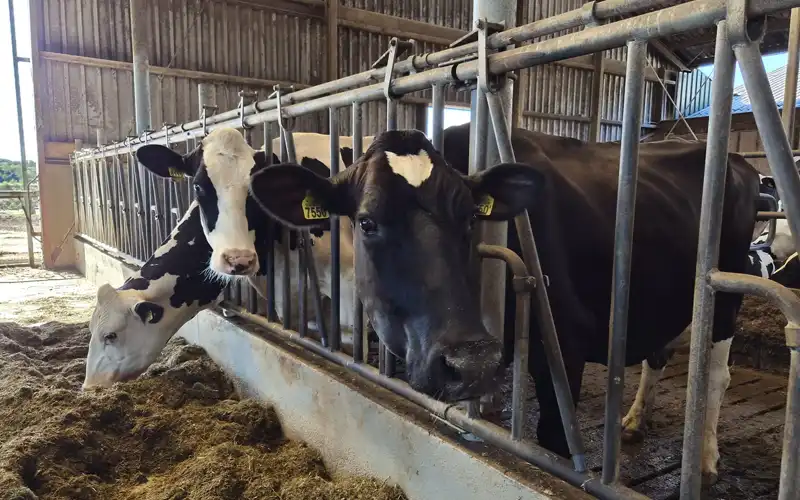
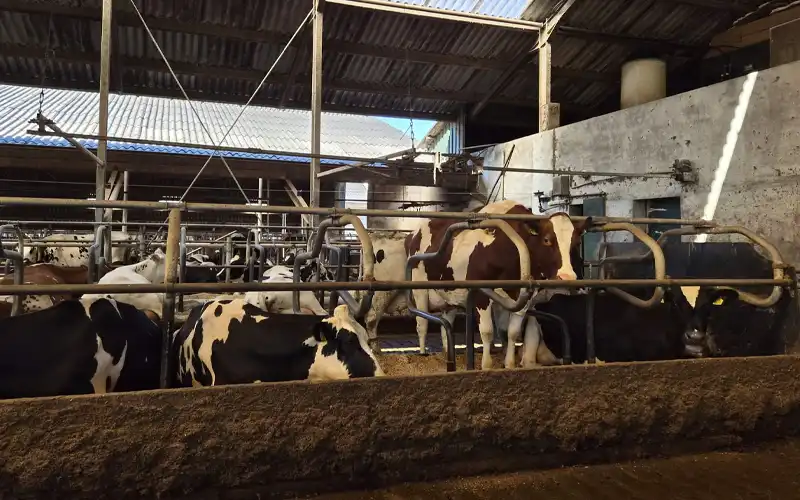
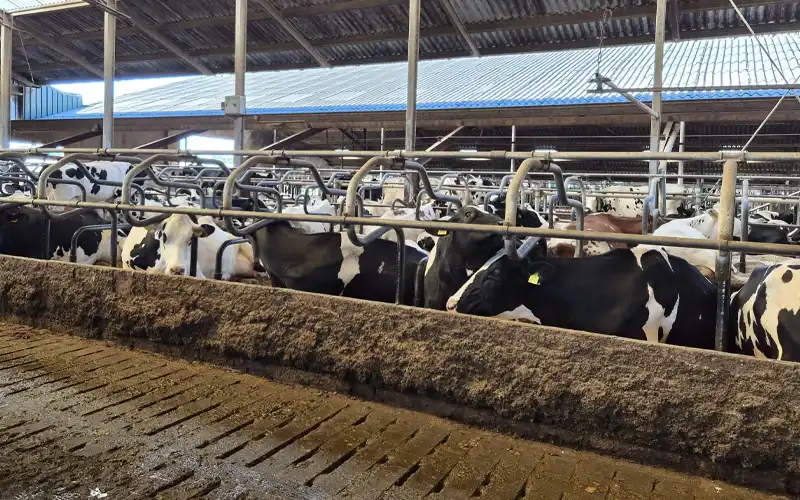
At the Gosselink family farm in Silvolde, 130 dairy cows are housed in a cubicle barn. For years the cell count was well over 200. They tried everything, but it would not come down.

Cell count before
Cell count for years: 200+
Cell count with PuraCare
Average cell count in the low 100s
2 wkn
Quarter samples, every two weeks
Since 2023
Consistent focus on udder health

Since 2023 they have been working within the PuraCare package: a tailor-made package to optimise udder health, with products and services that add value on their farm.

For example, taking milk samples every two weeks for a cell count per quarter with the QScout, at the two moments that matter: just before drying off and shortly after calving. The cell count is now structurally lower, with a low of 120. They had not seen a figure like that on paper in ten years.

No miracle cure, but three years of consistent focus on udder health. Regular monitoring and measuring, followed by the right targeted treatment. A solid foundation, and the discipline not to start tinkering as soon as things go against you.

“It just wouldn’t come down.”

The trigger was not a crisis. It was frustration.

“Every time you try something. But we just couldn’t get the cell count down. It stayed high.”

Peter Gosselink, Silvolde

They had changed the way they bedded the cubicles, scrutinised the drying-off method and had the milking parlour checked. Each time another dial to turn, each time the same result: a bulk tank cell count that stayed where it shouldn’t.

Meanwhile, everyone pointed at something else. One said it was the horse manure in the cubicles. The next said that was precisely not the cause. Another heard something in the milking machine. Different advisers, different stories, no breakthrough.

“We were doing something wrong somewhere. But then you also want proof.”

That is where it started. Not with a product, but with the need for facts. Because without proof, every adjustment remains a gamble and you pay for measures you never know worked.

There was something else, too. The vet said: keep in mind that the animal daily dose rises quickly at drying off. If they wanted to use antibiotics more selectively at drying off, they had to be able to show which cow needed it. They couldn’t. The milk recording gave an average, and nothing more.

What the average hides

The turning point was measuring per quarter, with the QScout. On the milk recording, a cow looks perfectly fine. A sample with the four quarters measured separately tells a different story.

One cow, two pictures

“Three quarters low and one high.”

On the milk recording it stays between 100 and 150. But that one quarter is well over 400.

Milk recording · average cow

118

On paper: nothing unusual

QScout · per quarter

  • LFlow
  • RFlow
  • LRlow
  • RR400+

That is the whole point. An average is a sum in which a problem disappears. Three clean quarters mask a fourth that is structurally elevated, and on paper you have a cow with nothing unusual.

This came to light especially with heifers. Animals you would confidently send into the dry period based on the milk recording, while one quarter needs attention.

“With heifers you find out then. On average you think: fine. And then a quarter comes out at 400 anyway. Then you think: so there really was something going on.”

If that quarter is not treated during the dry period, it comes back as a chronic quarter in the next lactation. And the one after that. That is how a farm builds up a group of chronic animals without noticing.

That is why measurements are taken at the two critical moments:

  1. Just before drying off

    This is your best chance of treatment in the entire lactation.

  2. 14–30 days after calving

    Did the treatment work, and was no new infection picked up during the dry period?

And which bacterium it is

A high quarter is a signal, not a diagnosis. The follow-up question is what lies behind it, and that determines whether treatment makes sense at all.

For that, milk from the infected quarter is plated and then goes into the Jupiter. Within a day it is clear which bacterium is causing the infection and the right next step can be taken. Whether the pathogen is cow-associated or environmental already makes a big difference to your approach.

That is exactly the question that kept the family busy for years.

“We sometimes wondered: is it really environmental, or is it cow-related? What is it? Then you also know what to focus on.”

Since they’ve known, they’ve been acting on it.

More targeted, not more

The picture that emerges from the quarter sample and the culture together fundamentally changes drying off. Not in volume, but in precision.

“You use it much more selectively. In the past you dried off all four quarters with antibiotics. Now it’s one or two.”

That works both ways. Some cows get less than before. Others actually do get something, because it is now there in black and white that it is needed.

“You simply have proof that you can treat her. It’s demonstrable.”

And the check is built in. At the start of the next lactation, the same cow is sampled again. If she comes back green, and therefore clean, you know the choice was right.

“If you measure the lactation after and she comes out green, then you say: it was worth it.”

That is the difference between a scattergun approach and targeted treatment. With the first you hope, with the second you know.

Measuring the health of your herd only makes sense if the basics are in place

A test result tells you where things go wrong. Prevention comes from the daily routine, and at Gosselink that routine is fixed.

After milking, the teats go into IO Dip 30, an iodine dip that seals the teat end while the teat canal is still open. That is the most vulnerable half hour of the day, twice a day. In the cubicles they use Purabed, a hygiene powder that keeps the cubicle dry and the pathogen pressure under the cow low. Two inconspicuous tasks, every day, year in, year out.

On top of that comes targeted support for the cows that need it: a bolus for animals that can use help from within, and Udder Cool Spray on the quarter that flares up. Not as standard across the whole herd, only where the measurements call for it.

“Peace, cleanliness and regularity. And above all clarity: that you always do the same thing.”

See what PuraCare can do for your herd

Every two weeks we measure the health of our cows, on Monday evening

The practical side is where most dairy farmers drop out, often before they know how it works. At Gosselink it has become routine.

On Monday evening the cows are ready in the milking parlour. Two people, the list at hand, sampling during milking. The selection is simple: the cows that will be dried off soon, plus the animals between 14 and 30 days after calving.

“We don’t spend that much time on it. The box gets collected, and that’s it. There’s no extra work involved.”

It can be done alone, but with two of you it goes considerably faster. Then you immediately know which cow is in front of you.

The green area keeps growing

The gain is not where many dairy farmers look for it.

“Keeping good cows good for longer. That’s the biggest part.”

You can see this in the annual charts. For heifers and second-calvers, the green area increases year on year. For older animals it goes more slowly, and that is a conscious choice: there are chronic cows among them that milk well and are therefore kept.

“In principle, a cow only leaves here when she is really done.”

So no radical clear-out. Chronic animals go on the list, but only leave when it makes business sense. It is a long-term process. The results are there, but are only now becoming visible.

You have to be able to handle a dip

From the first meeting it was clear that this would be a project of years. Not an action plan with results after a month.

“You also have to be able to handle a dip. Not immediately say: we’re going to do everything radically differently now.”

Because the dips will come. Heat, a new silage clamp, cows going outside, bluetongue. One cow with a heavily affected quarter can already colour the bulk tank cell count. Anyone who responds to that each time with a change of course never gets anywhere.

The reflex is to tackle everything at once. Usually that makes it worse: you change five things and afterwards don’t know which one worked. The first question is: where does this come from, and can I do something about it now? Sometimes the answer is simply that the weather is causing a dip and you have to sit it out. But you do have to keep measuring, monitoring and thinking.

“So you try to rule out a lot of things. Is it this, is it that? And then you also know what to focus on.”

Another step forward every year

What stands out about this way of working: it is never finished. There is no finish line after which it is done.

“You keep optimising. Every year you look for points to improve again. And every year you get further.”

That is not dissatisfaction, but method. Every year they look at where the next gain lies: in the dry period, in selection, in following up on results. Small steps, not one big intervention. That is exactly why it lasts.

PuraPlus

This farm’s package

  • IO spray or IO dip (30)
  • Purabed
  • Bulk tank milk (annual package)
  • Milk recording analysis (annual package)
  • Jupiter AI device
  • Qscout samples (tested at AgriPura)
  • Udder Spray Blue
  • Uddervit lactation bolus
  • Uddervit Dry off bolus
  • Lactovit
  • Purafoam
Tailored

PuraPlus forms the basis of the approach at the Gosselink family farm. Together we created a tailored version that fits their farm.
“You keep optimising. Every year you look for points to improve again. And every year you get further.”

Peter Gosselink, Silvolde

More information or get started right away?

No waiting times or complicated systems, but direct contact with people who know your farm. That is AgriPura. Ready for a better return from your herd? Or need more explanation or information? We are ready to help you!

Whatsapp

Quick contact, short lines.

Email

Detailed answers to all your questions.

Phone

Direct answers to your questions.